On This Page
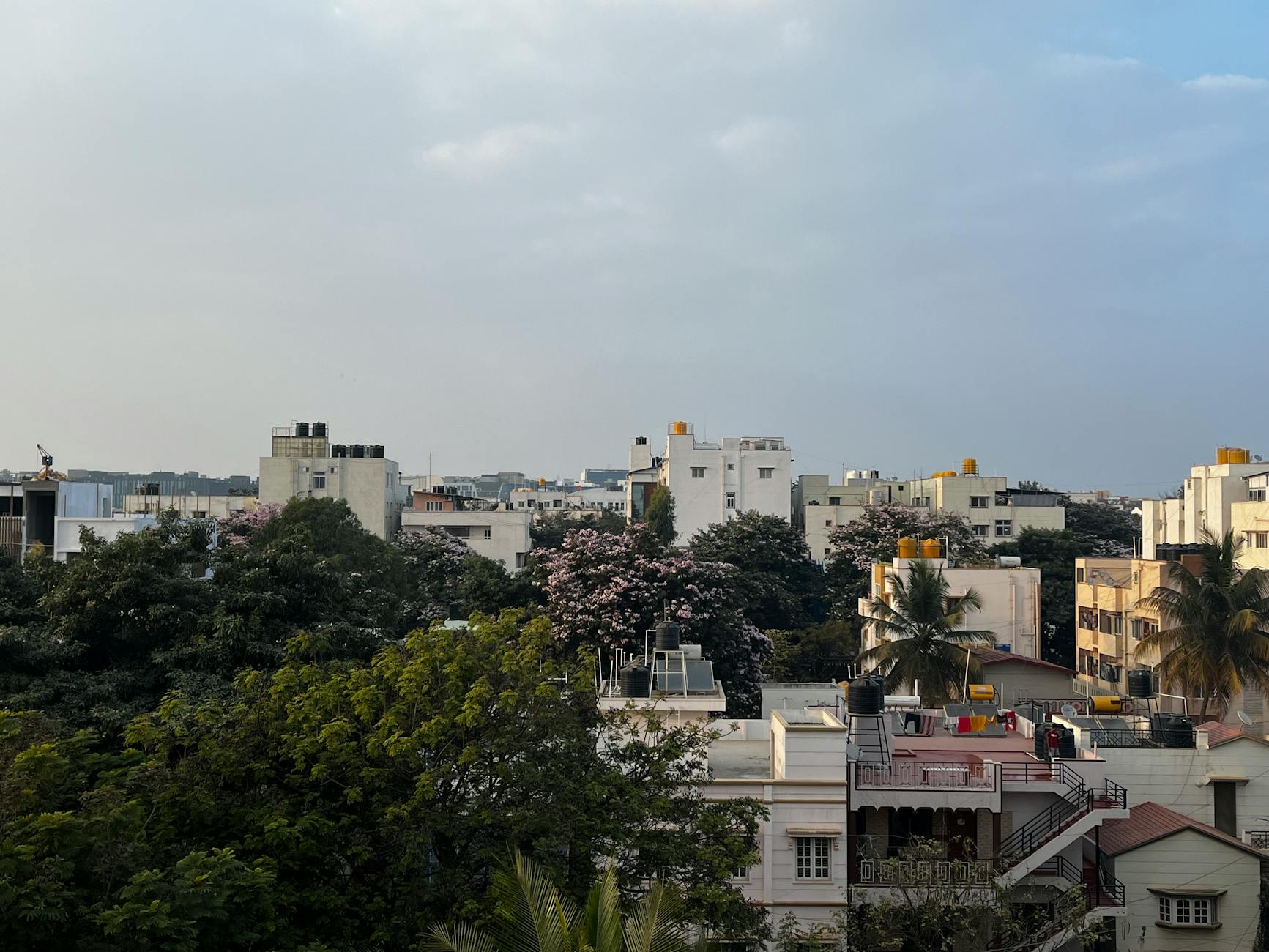
Kalapatti is one of Coimbatore's fastest-developing residential areas, located near the Coimbatore International Airport in the southeastern part of the city. Over the past decade, Kalapatti has seen explosive residential growth driven by its proximity to the airport, the Avinashi Road IT corridor, and affordable land prices compared to inner-city localities. The area is characterised by new DTCP-approved residential layouts, modern independent houses, gated communities, and a growing commercial strip along the Kalapatti Road. It attracts primarily IT professionals, young families, and NRIs (Non-Resident Indians) looking for modern homes with good investment potential.
For Kalapatti residents, rooftop solar is a natural choice. The area's new construction, unobstructed rooftops (thanks to predominantly low-rise development and airport height restrictions), and Coimbatore's excellent solar irradiance (5.0-5.3 kWh/m2/day) create ideal conditions for residential solar.
Kalapatti's Housing Profile
New Residential Layouts
Kalapatti's defining feature is its abundance of new residential layouts:
- Plot sizes: 1,000-3,000 sq ft in DTCP-approved layouts — Kalapatti offers some of the best value per square foot in Coimbatore
- Modern construction: Predominantly post-2015 builds with strong RCC structure, proper earthing, and modern electrical panels
- G+1 standard: Two-storey construction with 500-1,500 sq ft of usable terrace area
- IT professional homes: Designed with home offices, multiple ACs (3-4 split units), and high-speed internet — all driving electricity consumption of 400-700 units monthly
Solar potential: Excellent. New homes with clean rooftops, no shading from tall neighbours, and modern electrical infrastructure are ideal for 3-5 kW residential systems.
Gated Communities
Several gated communities and villa projects dot the Kalapatti landscape:
- Villas on 1,500-3,000 sq ft plots within gated compounds
- Uniform construction quality with builder-provided structural warranties
- Common amenities (clubhouse, gym, pool) suitable for community solar
- Bulk installation opportunities for cost savings
NRI Investments
Kalapatti has a significant number of NRI-owned properties:
- Homes built as future retirement residences, currently vacant or rented out
- NRI homeowners appreciate long-term investments — solar's 25-year savings profile aligns with this mindset
- Property management companies can oversee solar installation and monitoring for absentee owners
Choosing the Right System Size for Kalapatti Homes
Selecting the correct system size is the single most important decision you will make. An undersized system leaves savings on the table; an oversized system means unnecessary upfront cost. Here is a step-by-step process tailored to Kalapatti's housing stock.
Step 1: Analyse Your TANGEDCO Bills
Pull your last 12 months of EB bills. Note the monthly consumption in units (kWh). Kalapatti homes typically fall into these bands:
| Household Type | Monthly Consumption | Recommended System |
|---|---|---|
| Small family, 2 BHK, 1 AC | 200-300 units | 2-3 kW |
| IT professional, 3 BHK, 2-3 ACs, home office | 400-600 units | 4-5 kW |
| Large family, 4 BHK, 3-4 ACs | 600-900 units | 6-8 kW |
| Villa with pool pump, EV charger | 900-1,200+ units | 8-10 kW |
Use our solar savings calculator to get an exact recommendation based on your address and bill amount.
Step 2: Measure Your Roof Space
A general rule: every 1 kW of solar panels needs roughly 60-70 sq ft of shadow-free roof area. Walk your terrace between 9 AM and 3 PM and note any shadows from water tanks, stairhead rooms, or parapets. Most Kalapatti G+1 homes have 600-1,200 sq ft of usable terrace, which comfortably supports 5-10 kW.
Step 3: Account for Future Load Growth
If you plan to add another AC unit, switch to an induction cooktop, or run a 2-ton AC in a new room, factor that in now. Adding a panel later is possible but less cost-effective than getting the right size from the start. Refer to our detailed guide on choosing the right solar capacity for a deeper breakdown.
Step 4: Choose On-Grid, Hybrid, or Off-Grid
Most Kalapatti homes benefit from on-grid systems with net metering. If you experience frequent power cuts or want complete energy independence, consider a hybrid system with battery storage. Compare inverter types to understand the trade-offs.
Step 5: Get a Professional Site Assessment
Every roof is different. Contact Tristar for a free on-site evaluation where we measure exact shadow patterns, structural load capacity, and electrical panel compatibility. This is the most reliable way to finalise your system design.
Government Subsidies Breakdown for Kalapatti Residents
The central and state governments offer substantial subsidies that dramatically reduce your upfront cost. Here is what Kalapatti homeowners are eligible for in 2026.
PM Surya Ghar Muft Bijli Yojana
Under the PM Surya Ghar scheme, residential rooftop systems receive direct subsidies:
| System Size | Subsidy Amount |
|---|---|
| Up to 2 kW | Rs 30,000 per kW (Rs 60,000 max) |
| 2-3 kW | Rs 30,000/kW for first 2 kW + Rs 18,000/kW for remaining |
| 3-10 kW | Total subsidy capped at Rs 78,000 |
For the most popular 3 kW system among Kalapatti homes, the central subsidy comes to Rs 78,000, and since G.O. (Ms) No. 102 dated 19 September 2026 Tamil Nadu adds a Rs 22,000 state top-up, taking the combined subsidy to Rs 1,00,000. This brings the net cost of a 3 kW system down to approximately Rs 48,000-78,000 depending on equipment choice.
How to Claim the Subsidy
- Register on the National Portal with your TANGEDCO consumer number
- Select a registered vendor (Tristar is an empanelled installer)
- After installation, the vendor uploads commissioning documents
- TANGEDCO verifies the installation and net meter
- Subsidy is credited directly to your bank account within 30-60 days
Tamil Nadu does not levy additional state tax on residential solar equipment. Combined with central government subsidies, this makes 2026 one of the most affordable years to go solar. Check the latest panel prices for current market rates.
TANGEDCO Procedures for Kalapatti
Kalapatti falls under TANGEDCO Coimbatore East Distribution Circle.
Key TANGEDCO Offices
- Section Office: TANGEDCO Kalapatti Section, located on Kalapatti Road
- Sub-Division: Coimbatore East Sub-Division
- Distribution Circle: Coimbatore East
- Nearest TANGEDCO payment centre: Kalapatti TANGEDCO branch office
Net Metering Process
- Application: Submit at the Kalapatti section office with system details and vendor certificate
- Feasibility check: TANGEDCO inspects the site and checks transformer capacity (typically 15-20 days)
- Installation: After feasibility approval, install the system through the registered vendor
- Commissioning: Submit test reports and request net meter installation
- Net meter: TANGEDCO installs the bidirectional meter (usually within 30-45 days)
Kalapatti-Specific Notes
- Kalapatti's grid infrastructure is relatively new and being actively expanded. Most residential layouts have recently installed transformers with adequate capacity
- The section office is processing a growing number of solar applications as the area's residential base expands
- For gated communities, coordinate with the residents' association for bulk net metering applications
Costs and Savings
System Costs and ROI
| System Size | Net Cost (after subsidy) | Monthly Generation | Monthly Savings | Payback Period |
|---|---|---|---|---|
| 3 kW | Rs 70,000-1,00,000 | 390-420 units | Rs 2,000-3,200 | 3-4 years |
| 5 kW | Rs 2,00,000-2,70,000 | 650-700 units | Rs 4,000-5,800 | 4-4.5 years |
| 8 kW | Rs 3,70,000-4,70,000 | 1,040-1,120 units | Rs 7,000-9,500 | 4-5 years |
| 10 kW | Rs 4,70,000-6,00,000 | 1,300-1,400 units | Rs 9,000-12,000 | 4-5 years |
For a detailed methodology on how these numbers are calculated, see our solar ROI and payback guide.
Typical Kalapatti IT Professional Home Scenario
Scenario: New independent house on a 1,500 sq ft plot, G+1, 3 split ACs, home office setup, monthly consumption 550 units, 5 kW system
| Parameter | Value |
|---|---|
| Net cost after subsidy | Rs 2,35,000 |
| Monthly generation | 680 units |
| Monthly savings | Rs 4,000 |
| Annual savings | Rs 48,000 |
| Payback period | 4.9 years |
| 25-year savings | Rs 12.0 lakh |
With rising TANGEDCO tariff rates, actual savings over 25 years will likely be higher as grid electricity becomes more expensive while your solar cost remains fixed. Many Kalapatti households are achieving near zero electricity bills with correctly sized systems.
Airport Zone Solar Performance
Kalapatti's proximity to the airport and associated height restrictions create a solar-friendly environment:
| Parameter | Kalapatti (Airport Zone) | Dense Urban Coimbatore |
|---|---|---|
| Average shading from neighbours | Minimal | Moderate to high |
| Building heights | G+1 to G+2 (height restricted) | Up to G+4 or G+5 |
| Usable roof area | 80-95% of terrace | 50-75% of terrace |
| Annual generation premium | +5-8% | Baseline |
Seasonal Generation Data for Kalapatti
Understanding how solar output varies across the year helps you plan your energy usage and set realistic expectations.
| Month | Daily Generation (5 kW system) | Notes |
|---|---|---|
| January | 20-22 kWh | Clear winter skies, moderate temperatures |
| February | 22-24 kWh | Increasing solar hours |
| March-May | 24-27 kWh | Peak summer — highest generation months |
| June-August | 18-22 kWh | Southwest monsoon reduces output by 15-20% |
| September | 20-23 kWh | Transition month, improving conditions |
| October-November | 16-20 kWh | Northeast monsoon — lowest generation months |
| December | 19-21 kWh | Post-monsoon recovery |
Annual average: 21-23 kWh/day for a 5 kW system, or approximately 650-700 units per month.
Even during the monsoon months, Kalapatti systems generate useful power. The October-November dip is the only period where generation drops notably, and even then it covers 60-70% of daytime needs. Over a full year, strong summer months more than compensate.
Equipment Recommendations for New Construction
If you are building a new home in Kalapatti — or your home was recently completed — you have the advantage of integrating solar from the ground up. Here is what we recommend.
Panels: Mono PERC or Bifacial
For most Kalapatti rooftops, 540-550W mono PERC panels offer the best balance of efficiency, price, and warranty. If your terrace has a light-coloured surface (white weatherproof coating is common in new Kalapatti builds), bifacial panels can boost generation by 5-10% by capturing reflected light from the rear side. Browse our product catalogue for available options.
Inverters
- On-grid string inverters are the standard for Kalapatti homes with reliable grid supply
- Hybrid inverters are worth considering if you want to add battery storage later without replacing the inverter
- All inverters we install come with WiFi monitoring — essential for tech-savvy Kalapatti homeowners
Mounting Structure
New construction allows you to embed mounting bolts directly into the roof slab during casting, eliminating chemical anchoring later. Ask your builder to provision 8mm J-bolts at 3-foot intervals across the terrace. This saves Rs 5,000-10,000 and provides a stronger, leak-proof mount.
Electrical Provisions
Plan these during construction: dedicated 6 sq mm DC cable conduit from terrace to main DB, space for the inverter near the main DB, a separate MCB slot for the solar feed, and an earthing pit near the inverter location. For a complete checklist, read our solar-ready home construction guide.
Area-Specific Considerations
Airport Height Restrictions
Kalapatti's proximity to the airport runway means building heights are restricted in certain zones. For solar installations:
- Standard rooftop solar (panels mounted 1-2 feet above parapet) is well within height limits
- No elevated structures or tall mounting frameworks are needed
- The height restriction benefits solar by ensuring neighbours cannot build tall structures that shade your roof
- Solar panels are anti-reflective and do not cause glare issues for aircraft
Work-From-Home IT Professionals
Kalapatti's IT professional demographic has specific electricity patterns ideal for solar:
- Daytime consumption: Work-from-home setups (laptop, monitor, AC, WiFi router) consume 3-5 kWh during working hours — directly offset by solar
- Self-consumption ratio: IT professionals working from home achieve 60-80% solar self-consumption, much higher than households where everyone is away during the day
- Smart inverter monitoring: Tech-savvy homeowners can monitor solar generation and consumption in real-time through mobile apps, optimising usage patterns
- Reducing EB bills: With slab-based TANGEDCO tariffs, even partial solar offset can drop your bill into a lower tariff slab, compounding savings
NRI Property Solar Investment
For NRI property owners, solar installation in Kalapatti offers:
- Remote monitoring: Modern inverters with WiFi-enabled monitoring allow NRIs to track system performance from anywhere in the world
- Property value appreciation: Solar-equipped homes command higher resale and rental values
- Inflation hedge: Locking in electricity costs at today's rates protects against future tariff hikes (TANGEDCO tariffs have risen 5-8% annually)
- Tenant attraction: Solar-equipped rental properties attract quality tenants willing to pay premium rent
New Layout Infrastructure
Kalapatti's new residential layouts typically have:
- Underground electrical cabling (less prone to outages than overhead lines)
- Three-phase power supply to individual homes
- Dedicated distribution transformers for each layout
- Road access for installation vehicles and crane trucks (needed for larger systems)
Maintenance Tips for the Airport-Area Environment
Kalapatti's proximity to the airport and its semi-urban setting create a specific maintenance context. Here is what to watch for.
Dust and Particulate Matter
Aircraft operations, ongoing construction, and unpaved approach roads generate fine dust. In Kalapatti, we recommend:
- Cleaning frequency: Every 3-4 weeks during dry months (March-June), every 6-8 weeks during monsoon when rain provides natural cleaning
- Method: Plain water and a soft sponge in the early morning. Avoid abrasive brushes. See our panel cleaning guide for details
- Automated cleaning: For 8 kW+ systems, robotic cleaners are a worthwhile investment
Bird Droppings
Kalapatti's semi-rural fringes attract birds. Droppings create hot spots on panels that reduce output disproportionately. Install bird mesh around the panel array (costs Rs 2,000-4,000) to prevent nesting underneath panels and reduce droppings on the surface.
Annual Professional Inspection
Schedule a yearly inspection that covers electrical connections, inverter performance, earthing resistance, and mounting bolt torque. For more details, read our solar panel maintenance tips. All Tristar installations include a complimentary first-year inspection.
Warranty Awareness
Most Tier 1 panels carry a 25-year performance warranty, and inverters typically have 5-10 year warranties. Understand what is covered and what voids coverage — our warranty guide explains the fine print.
Common Myths Kalapatti Residents Ask About
We have installed systems across Kalapatti and hear the same concerns repeatedly. Here are the facts.
"Solar panels will damage my new waterproofing"
Modern mounting uses non-penetrative clamps or chemical-anchored bolts with waterproof sealant. Panels actually protect the roof surface underneath from UV degradation and rain. Your terrace below the panels stays cooler, too.
"Coimbatore gets too much rain for solar"
Coimbatore receives about 60-70 rainy days per year, concentrated in the October-November northeast monsoon. Even on overcast days, panels generate 20-30% of rated output. Monsoon performance data confirms annual generation targets are consistently met.
"The subsidy process is too complicated"
As an empanelled installer, Tristar handles the entire subsidy application. You do not need to visit any government office. The subsidy is credited directly to your bank account after TANGEDCO verification.
"I should wait for better technology"
Panel efficiency improves incrementally (0.3-0.5% per year), but subsidy availability will not stay this favourable indefinitely. Every month you wait is a month of paying full electricity bills. The financial case for installing now is stronger than waiting.
"Solar does not work during power cuts"
Standard on-grid systems shut down during power cuts for safety. If backup is important, a hybrid system with battery storage keeps essential loads running. Read our full myths debunked guide for more.
How Tristar Compares to Other Installers
Kalapatti homeowners have multiple solar vendors to choose from. Here is what sets Tristar apart.
| Factor | Tristar Green Energy | Typical Local Installer |
|---|---|---|
| MNRE empanelment | Yes — eligible for all central subsidies | Often not empanelled |
| Local service team | Coimbatore-based, same-day response | May rely on third-party technicians |
| Equipment | Direct Tier 1 panel and inverter partnerships | May use rebranded brands |
| After-sales monitoring | WiFi-enabled remote monitoring included | Often no monitoring support |
| Subsidy processing | End-to-end, no office visits for you | May require you to handle paperwork |
Visit our customer testimonials page to see reviews from Kalapatti and Coimbatore homeowners. You can also view completed installations in our project gallery.
For questions about our process or company background, see our about page or browse our FAQ section.
Nearby Areas with Active Installations
Tristar has completed installations across the Coimbatore region. If you are comparing localities or have family considering solar nearby, these guides may help:
- Sulur: Adjacent to Kalapatti on the eastern side, similar airport-zone advantages
- Singanallur: Western neighbour, more established residential area with a mix of old and new homes
- Irugur: Southeast of Kalapatti, rapidly developing with new layouts
Refer to our comprehensive Coimbatore solar installation guide for city-wide information on costs, TANGEDCO procedures, and area comparisons.
Kalapatti Landmarks and Solar Context
- Coimbatore International Airport: The area's defining landmark, approximately 3-5 km away
- Kalapatti Road: The main arterial connecting to Avinashi Road and the city centre
- Nearby IT parks: TIDEL Park, Cognizant campus, and other IT establishments along Avinashi Road (5-8 km)
- New DTCP layouts: Multiple residential developments off Kalapatti Road with modern infrastructure
- Kalapatti village centre: The original village core with a mix of older and newer properties
- Singanallur (west): The adjacent, more established locality connecting Kalapatti to the city
Frequently Asked Questions
How long does the complete installation take in Kalapatti? Physical installation takes 1-2 days for residential systems. TANGEDCO net metering approval adds 30-45 days. Total timeline is typically 45-60 days.
Will solar panels affect my home's resale value? Yes, positively. Solar-equipped homes in Coimbatore command 3-6% higher resale values. In Kalapatti's competitive real estate market, this is a meaningful differentiator.
Can I install solar if I have a water tank on my terrace? Yes. We design the panel layout around water tanks, satellite dishes, and other fixtures. In most Kalapatti homes, 70-85% of the terrace remains usable even after accounting for obstructions.
What happens to excess power my panels generate? Under net metering, excess units are exported to the grid and credited against your future consumption. You effectively use the grid as a free battery.
Is three-phase supply mandatory for solar? For systems above 3 kW, yes. Most Kalapatti homes already have three-phase. Upgrading from single-phase costs approximately Rs 2,000-3,000 through TANGEDCO.
Does Tristar handle the TANGEDCO paperwork? Yes, completely. We prepare all documentation, submit applications at the Kalapatti section office, coordinate inspections, and follow up until your net meter is installed and activated. You do not need to visit any government office.
Next Steps for Kalapatti Residents
Kalapatti's new homes, tech-savvy residents, airport-zone height restrictions, and Coimbatore's excellent solar irradiance make it one of the city's most promising locations for residential solar. Whether you are an IT professional working from home, a young family in a new layout, or an NRI investor, solar delivers strong financial returns and energy independence.
- Calculate your savings with our online tool
- Request a free site assessment — we will evaluate your new home's rooftop and provide an optimised solar design
- Start saving: Every month without solar is a month of paying Rs 6-8/unit for electricity that the Coimbatore sun could provide for free
Tristar has a local installation team in Coimbatore handling projects across Kalapatti and the airport area. We manage the complete process from design to TANGEDCO Coimbatore East net metering approval.
Ready to Go Solar?
Get a personalized solar quote based on your electricity consumption and roof area.
Related Articles
Solar Installation in Annur | Coimbatore Rural Guide
Annur is a semi-urban town near Karamadai on the northern outskirts of Coimbatore district with agricultural and residential properties. Learn about solar installation costs, TANGEDCO procedures, and savings.
Solar Installation in Ganapathy | Coimbatore
Ganapathy is a well-established middle-class residential area near Saibaba Colony in Coimbatore. Learn about solar installation for independent houses, TANGEDCO procedures, and savings for Ganapathy residents.
Solar Installation in Gandhipuram | Coimbatore
Gandhipuram is Coimbatore's central commercial hub with shops, offices, and dense mixed-use buildings. Learn about solar installation for businesses and residences, costs, and TANGEDCO procedures.